

According to several psychological studies, moving is one of the most stressful events for those who experience it, only surpassed by difficult situations such as the loss of a loved one, dealing with an illness, or a divorce.
This is magnified when young children experience the move, as these are times of uncertainty and confusion. Their limited life experience, as well as their close social and family circle, make this situation an even greater challenge for them. Furthermore, we must understand that it is an imposed situation that they have not chosen themselves.
There are many feelings children can experience during a move. Their reaction will depend heavily on their age:
- As we have already mentioned, children are usually not consulted when making such an important decision as changing residence, nor are they consulted about decisions that must be made during the move, which can make them feel displaced and/or excluded. Additionally, in a couple, both partners are not always in agreement about moving, and children are exposed to adult conversations and potential marital arguments.
- In most cases, moves involve a change of neighborhood, city, or even country, with a corresponding change of school. They lose their friends, leave their comfort and trust zone, and have to start from scratch building new social relationships. When we talk about teenagers, this point is aggravated by the potential loss of first loves and strong bonds with their friends.
- The unknown frightens them (although this is not exclusive to children); not knowing the destination, the house, or the new school creates a situation of bewilderment and genuine stress, which can lead them to refuse this “imposed change.” It is advisable to prepare them in advance, informing them about what their new life will be like from now on.
How can we avoid dramatic situations and help children make moving a less traumatic experience?
Up to 3 or 4 years of age, children usually adapt to a change of home without too many complications, as they consider their home to be wherever their parents or caregivers are, regardless of the physical space itself. However, it is important to consider their enormous capacity for absorption, as children feel and experience everything that happens to them at that age very intensely. Parents transmit our worries, joys, and moods to them almost without realizing it.
For this reason, it is important to approach the move with calm, security, and confidence, and to be able to teach them a lesson in resilience and adaptation to change. This is the message they should perceive, and for this, you can rely on the following tips:
- First, explain the situation to them with a positive approach, listening and answering their questions. No matter how young they are, thousands of questions will arise. If they are older and more mature children, it is advisable to consider their opinion.
- Avoid arguing in front of them. No child likes to see their parents argue, much less during a delicate time. Try to resolve differences in places or at times when the children are not present.
- Describing the destination, showing them photos of the new home, the neighborhood, and their new school can help them progressively build their new life, making the change less drastic.
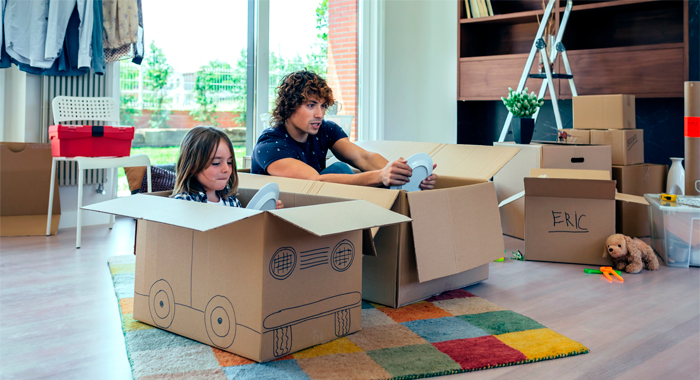
- Choose a good time for them to move. The most common is during school holidays, as children are free from academic load and can collaborate and participate more actively in various moving tasks. This will make them feel important and involved in the change process. They can select their toys and put them in boxes that they themselves will paint, or classify and write what the boxes contain.
- Try to keep the decoration of their old room initially. Keeping their favorite objects can speed up their adaptation process. It is not advisable to introduce more changes at this time, unless they themselves wish to. In the case of pre-teen children, the opposite may occur. A new room, to their liking, can become a great incentive.
- Considering the location of their new room, being close to their parents’ room helps them feel more secure during a time of change like a move.
It can be very helpful to hire a moving company to free us from the most uncomfortable and physically demanding parts of the relocation, such as packing belongings, assembling and disassembling furniture, and loading and unloading boxes. All these tasks take a lot of time that we can dedicate to them.
Contact Mudanzas Diagonal and ask for information and a quote for your no-obligation move. Our team is accustomed to performing moves with children and making the move a special, fun day that will last in their memory.